BitcoinWorld OKX Account Trading: The Shocking Zero-Tolerance Policy That’s Reshaping Crypto Security In a decisive move that’s sending ripples through the cryptocurrency industry, OKX founder Star Xu has declared an uncompromising zero-tolerance policy against account trading, fundamentally challenging how digital asset platforms approach user security and identity management. This announcement, made via social media platform X on March 15, 2025, directly addresses growing concerns about secondary market account transactions that threaten the integrity of cryptocurrency exchanges worldwide. The policy emerges as exchanges face increasing regulatory scrutiny and user protection demands, positioning OKX at the forefront of security-first platform management. OKX Account Trading Policy: The Foundation of Exchange Security Star Xu’s statement represents more than just platform policy—it’s a fundamental declaration about how cryptocurrency exchanges must prioritize security over convenience. The announcement specifically responded to a user requesting the unfreezing of an account containing 40,000 USDT, which the user openly admitted to purchasing rather than creating through legitimate registration channels. Xu emphasized that OKX considers the identity information provided during initial registration as the most reliable security foundation, creating what industry experts call a “first-contact trust model.” This approach contrasts sharply with platforms that prioritize user flexibility over security verification, potentially setting a new industry standard for account management protocols. Cryptocurrency exchanges globally face increasing pressure to implement robust security measures, particularly as regulatory frameworks like the European Union’s Markets in Crypto-Assets (MiCA) regulations and the United States’ evolving digital asset legislation demand stronger user protection. According to blockchain security firm Chainalysis, account-related fraud represented approximately 15% of all cryptocurrency losses in 2024, totaling over $2.3 billion globally. This context makes OKX’s policy announcement particularly significant, as it addresses a growing vulnerability that many platforms have historically treated as a secondary concern. The Technical Framework Behind Account Security Modern cryptocurrency exchanges employ sophisticated technical frameworks to detect and prevent unauthorized account activities. These systems typically include: Behavioral analytics algorithms that monitor login patterns and transaction behaviors Multi-factor authentication requirements that tie accounts to specific devices and locations Identity verification protocols that cross-reference registration data with ongoing activity Blockchain forensic tools that trace fund movements across platforms OKX’s policy specifically addresses what security experts call “account portability risk”—the danger created when users transfer account access rather than assets. This practice bypasses standard security protocols and creates significant vulnerabilities for both the platform and legitimate users. The exchange’s firm stance reflects growing industry consensus that account integrity must remain non-negotiable, even when facing public pressure or emotional appeals from affected users. Cryptocurrency Exchange Security: Evolving Standards and Practices The cryptocurrency industry has undergone significant security evolution since Bitcoin’s creation in 2009. Early exchanges prioritized accessibility and growth, often implementing minimal security measures that left users vulnerable to various forms of exploitation. However, major security breaches and increasing regulatory oversight have forced platforms to develop more sophisticated protection systems. OKX’s current policy represents what security analysts describe as “third-generation exchange security”—moving beyond basic two-factor authentication and cold storage to comprehensive identity management and behavioral monitoring. Comparative analysis reveals how different exchanges approach account security: Exchange Account Transfer Policy Identity Verification Level Public Disclosure OKX Zero tolerance, immediate freezing KYC Level 3 required Public statements by founder Binance Case-by-case review KYC Level 2 standard Internal policy documents Coinbase Prohibited but variable enforcement KYC Level 3 for certain features Terms of Service reference Kraken Strict prohibition KYC Level 2 minimum Support documentation This policy landscape demonstrates how exchanges balance security requirements with user experience considerations. OKX’s approach places security as the absolute priority, potentially sacrificing some user flexibility for enhanced protection. Industry analysts note that this positioning aligns with increasing regulatory expectations, particularly as financial authorities worldwide demand stronger anti-money laundering (AML) and know-your-customer (KYC) compliance from cryptocurrency platforms. The Regulatory Context: Global Standards and Local Requirements Global regulatory frameworks increasingly influence exchange security policies. The Financial Action Task Force (FATF) Travel Rule, implemented across multiple jurisdictions, requires exchanges to share sender and recipient information for transactions exceeding certain thresholds. This regulation makes accurate identity verification essential, as exchanges must maintain reliable records of account ownership. Similarly, the European Union’s Sixth Anti-Money Laundering Directive (6AMLD) imposes strict requirements on financial institutions, including cryptocurrency exchanges, to prevent illicit financial activities. OKX’s zero-tolerance policy directly supports these regulatory requirements by ensuring that account ownership remains transparent and verifiable throughout the account lifecycle. This approach helps the exchange maintain compliance across multiple jurisdictions while protecting users from potential legal complications arising from account transfers. Security experts emphasize that clear, consistently enforced policies provide necessary protection for both platforms and users in an increasingly regulated environment. Social Media Appeals and Security Vulnerabilities: A New Threat Landscape Star Xu specifically addressed the emerging threat of social media appeals in his statement, noting that emotional posts seeking public sympathy could represent “a new type of scam that harms the actual account owner.” This observation reflects growing concern within the cybersecurity community about how social platforms become vectors for social engineering attacks. Bad actors increasingly use emotional narratives to pressure platforms into bypassing security protocols, creating what experts call “sympathy-based security breaches.” Recent analysis by cybersecurity firm CrowdStrike indicates that social engineering attacks targeting cryptocurrency platforms increased by 47% between 2023 and 2024, with social media platforms serving as primary attack vectors. These attacks often follow predictable patterns: Emotional narrative construction creating victim personas Public pressure campaigns across multiple platforms Coordinated community responses designed to overwhelm support systems Fabricated documentation supporting false ownership claims OKX’s firm stance against such appeals establishes important precedent for how exchanges should respond to public pressure campaigns. By maintaining consistent policy enforcement regardless of social media sentiment, the exchange protects both its security infrastructure and legitimate users who might otherwise become victims of sophisticated social engineering schemes. This approach aligns with recommendations from cybersecurity organizations like the National Institute of Standards and Technology (NIST), which emphasizes consistent policy enforcement as fundamental to effective security management. Document Verification Protocols: Establishing Legitimate Ownership For users who genuinely need to regain access to frozen accounts, OKX maintains clear document verification protocols. Star Xu emphasized that legitimate owners “must submit the necessary documents to prove” their identity and ownership claims. This process typically involves multiple verification stages designed to establish ownership beyond reasonable doubt while preventing fraudulent claims. Standard verification protocols include: Primary identification documents matching original registration Secondary verification materials establishing account control history Transaction pattern analysis confirming typical usage behaviors Cross-platform verification where applicable and available These protocols balance security requirements with user accessibility, providing legitimate owners with clear pathways to account recovery while maintaining robust protection against fraudulent claims. Industry analysts note that transparent, well-documented verification processes benefit both platforms and users by establishing clear expectations and reducing support system strain. Conclusion OKX’s zero-tolerance policy on account trading represents a significant evolution in cryptocurrency exchange security, establishing clear boundaries that prioritize user protection over flexibility. Star Xu’s public statement reinforces the exchange’s commitment to maintaining the integrity of its security framework, particularly regarding identity verification and account ownership. As the cryptocurrency industry matures and faces increasing regulatory scrutiny, such policies will likely become standard practice across major platforms. The OKX account trading prohibition demonstrates how exchanges must balance user experience with security requirements in an increasingly complex digital asset landscape, setting important precedent for industry-wide security standards. FAQs Q1: What exactly does OKX’s zero-tolerance policy on account trading mean? OKX’s policy means the exchange will immediately freeze and investigate any account discovered to have been purchased or sold, regardless of circumstances. The platform considers only the original registration information as valid proof of ownership and requires strict document verification for any ownership claims. Q2: Why do cryptocurrency exchanges prohibit account trading? Exchanges prohibit account trading primarily for security and regulatory compliance reasons. Account transfers bypass standard identity verification processes, creating vulnerabilities for money laundering, fraud, and theft. Additionally, regulations require exchanges to maintain accurate ownership records for all accounts. Q3: What should I do if I’ve legitimately purchased an OKX account? If you’ve purchased an OKX account, you should immediately contact support and follow their document verification process. However, be aware that the exchange maintains strict policies against account transfers, and recovery is not guaranteed. The safest approach is always to create your own account through proper registration channels. Q4: How can I ensure my cryptocurrency account remains secure? To maintain account security, always use original registration information, enable all available security features (including two-factor authentication), never share login credentials, and monitor account activity regularly. Create accounts only through official platforms using your verified identity information. Q5: Are other cryptocurrency exchanges implementing similar policies? Many exchanges are strengthening their account security policies, though approaches vary. Most major platforms prohibit account trading in their terms of service, but enforcement rigor differs. OKX’s public, zero-tolerance approach represents one of the strongest stances currently implemented by a major exchange. This post OKX Account Trading: The Shocking Zero-Tolerance Policy That’s Reshaping Crypto Security first appeared on BitcoinWorld .

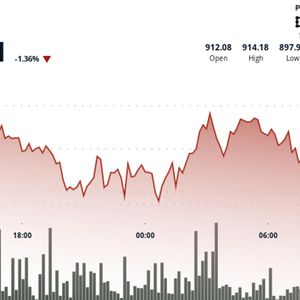 BNB slides to $900 as traders look to havens