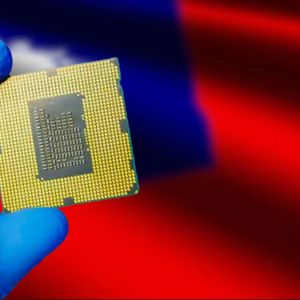
Taiwan’s government pushed back Friday against growing concerns that a landmark trade agreement with the United States could hollow out its vibrant tech sector, even as the island’s crown‑jewel chipmaker, Taiwan Semiconductor Manufacturing Co. (TSMC), continues to build big advanced facilities abroad. Under a sweeping new deal struck with Washington this week, the region’s firms have pledged at least $250 billion in direct investment to expand U.S. semiconductor, energy, and artificial‑intelligence manufacturing — with TSMC leading the charge and already spending heavily on expanded fabs and advanced packaging operations in Arizona. Vice Premier Cheng Li-chiun defended the companies’ investments, saying, “This is not an industrial relocation, but instead an extension and expansion of Taiwan’s technology industry.” She insisted that the Taiwan government backs firms in maintaining their base at home and boosting local investment. Cheng says the U.S. is counting on other partners, not just Taiwan, for chip production On Thursday, the United States said it had struck a deal with Taiwan to cut tariffs on Taiwanese goods from 20% to 15% in return for $500 billion in finance or investment from Taiwan, including its chipmakers. However, some Taiwanese analysts and lawmakers have voiced unease that the shift of capital and facilities abroad could erode the domestic high‑tech ecosystem. The agreement has worried nationals who believe the Democratic Island could undermine the island’s economic strength, particularly after Commerce Secretary Howard Lutnick suggested relocating 40% of the nation’s supply chain to America. The U.S. Commerce Department had also noted that the deal will “drive massive reshoring of America’s semiconductor sector.” Nonetheless, Cheng reassured nationals that the U.S. objective of domestic chip independence for national security isn’t just Taiwan-dependent, pointing to efforts with other countries and domestic chipmakers. She added, “Everyone is working together in the United States to revitalize the development of the AI industry and to lead AI-related business opportunities. It is not something Taiwan is expected to accomplish on its own.” On Friday, Premier Cho Jung-tai also praised negotiators for a job well done in securing the deal, noting that the achievements so far reflect significant effort. Also speaking on the deal, Bloomberg analysts Adam Farrar, Michael Deng, and Nicole Gorton-Caratelli said the trade agreement will only modestly influence Taiwan’s economy. Still, it carries significant political weight amid increasing pressure from China. They also contended that the U.S. could see domestic semiconductor production rise significantly in the next ten years. Taiwan’s chip production capacity will be at 80% Speaking in Taipei on Friday, Economics Minister Kung Ming-hsin also projected that by 2030, Taiwan will hold roughly 85% of the capacity for advanced chips at 5 nanometers or below, while the U.S. will make up about 15%. He added that by 2036, Taiwan should hold about 80% of capacity, with the U.S. taking roughly 20%. For years, Taiwan’s production of the world’s most advanced chips has been sometimes viewed as a “silicon shield” that deters potential Chinese military action. At the moment, the opposition Kuomintang has blamed the Democratic Progressive Party for jeopardizing the island’s tech sector by agreeing to trade concessions with Washington . Taiwan’s largest semiconductor company, TSMC, is already committing an additional $100 billion into U.S. operations, building at least four more chip plants beyond those previously envisioned. Largely, its U.S. expansion has sparked worries about Taiwan’s position in the global semiconductor chain. Still, TSMC executives insist that leading-edge technologies will be developed in Taiwan and kept there for years before being relocated abroad, primarily due to logistics. Chief Financial Officer Wendell Huang even commented, “The most leading-edge technologies will be run in Taiwan because of practical reasons. When they get stabilized, then we can try to accelerate the technology to move overseas.” Join a premium crypto trading community free for 30 days - normally $100/mo.