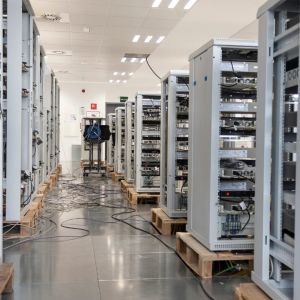
Data centers in the US have added $6.5 billion to electricity costs, fueling concerns about the energy demands of artificial intelligence (AI). The Big data centers, where powerful computers run cloud services, AI systems, and other digital operations, are quickly growing to become among the country’s largest electric consumers. The new surge in demand is putting pressure on the grid, contributing significantly to rising power costs for both businesses and households. A report by Monitoring Analytics LLC revealed that, following a December auction held by grid operator PJM Interconnection LLC , data centers contributed $6.5 billion to the price of acquiring electricity. The sum of the electricity costs between June 2025 and May 2028 is now $23.1 billion—nearly half the $47.2 billion recorded across three recent PJM auctions. PJM, which operates the electricity grid for nearly 20% of the US population, links power plants to homes and businesses in multiple states. The rapid rise of data centers has made them the fastest-growing energy consumers in this system, contributing to higher electricity costs for all users. Data centers drive energy demand Data centers require substantial amounts of electricity to operate, as their computers perform constant computations. Because AI systems operate on sophisticated computational technology, this also drives ever-greater demand for power. These systems handle large amounts of data to enable machine learning, image recognition, language translation, and other digital services. Running these facilities isn’t just about running computers. The servers generate heat and require continuous cooling, often necessitating the use of additional electricity. Stable supply to such large energy users also requires improvements to the electricity grid, including the installation of new infrastructure and the construction of more powerful transmission lines. These improvements are ultimately expensive, and the costs are passed on to consumers who pay more for electricity each year. If unbridled growth of data centers becomes the norm, experts warn, it could drive up energy inflation, hitting family homes and companies already grappling with soaring costs. Feds crack down on data centers The increasing demand for electricity is prompting regulators at both the state and federal levels to take action. State regulators are beginning to impose fees and financial obligations on technology companies so that data centers pay fairly for electricity infrastructure costs. At the federal level, the Federal Energy Regulatory Commission has recently told PJM to adopt rules that would ensure data center developers pay their fair share for grid costs. The move aims to strike a balance between the financial obligations of large industrial power users, such as data centers, and those of smaller electricity consumers, including households. Such measures aim to prevent soaring electricity bills, which disproportionately burden everyday Americans, while still facilitating the growth of the technology sector. PJM will need to implement systems that reflect the true cost of high-energy users, thereby establishing a more equitable model of electricity supply. Data centers are vital components of today’s technology, providing the foundation of all devices, from smartphones to AI systems. However, their growth comes at a cost as well. A $6.5 billion rise in electricity costs underscores the energy intensity of AI and cloud computing . Regulators are trying to ensure that such companies shoulder the financial burden, shielding power consumers against steep energy bills while maintaining a consistent electricity infrastructure. Get seen where it counts. Advertise in Cryptopolitan Research and reach crypto’s sharpest investors and builders.