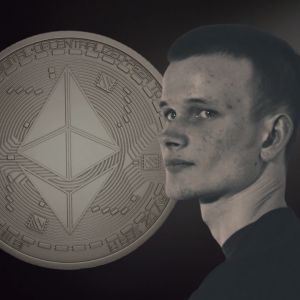
Vitalik Buterin, co-founder of Ethereum, has admitted he was wrong about something he said nearly ten years ago. The blockchain pioneer recently said he’s changed his mind about how users should interact with and check blockchain networks. Buterin caused a stir in 2017 when he referred to the notion of individuals verifying blockchain data on their own as a “weird mountain man fantasy.” He now claims that viewpoint was incorrect. His latest remarks on X demonstrate that he has been persuaded to change direction by both new technologies and lessons learned over the years. The 2017 debate over blockchain design The change brings up a long-standing debate over the proper operation of blockchains. That year, Buterin and blockchain theory researcher Ian Grigg engaged in a public argument. According to Grigg, blockchains should simply record transaction times. He reasoned that the real state of affairs, such as how much money people have or what smart contracts are doing, could be recreated on separate machines and subsequently discarded. Buterin strongly opposed that idea . He said it would force people to constantly replay every transaction that ever happened just to know what’s current, or they would have to rely on outside services to tell them what’s going on. Buterin advocated for Ethereum’s approach instead. Snapshots of the network’s state get attached to each block. With something called Merkle proofs and assuming most miners or validators are honest, users could check specific information without depending on a middleman. The problem with making everyone verify everything themselves, Buterin argued back then, was that regular computers couldn’t handle it. The only way to make it work would be to severely limit how much the network could do. New cryptography changes the equation So what changed? The answer is zk-SNARKs, a type of advanced math that lets someone prove they did a bunch of calculations correctly without having to show their work or make others redo everything. After years of having to choose between poor solutions, Buterin characterizes zk-SNARKs as discovering an inexpensive, universal solution. Thanks to this technique, Ethereum can now provide full verification security without making it excessively costly or challenging for average users. He says this breakthrough means Ethereum can rethink compromises it once had no choice but to accept. That’s particularly true when it comes to scaling up, staying decentralized, and allowing peopl e to ve rify things themselves. Buterin also admit s hi s earlier thinking depended too much on perfect conditions. In the real world, networks fail. In addition to slowing down connections and shutting down services, middlemen may be forced to prohibit specific apps or users due to external pressure from society or governments. When those issues arise, relying on other parties or requiring developers to intervene becomes a vulnerability. That realization supports his renewed interest in what he calls the “mountain man’s cabin” idea. It’s a backup plan that lets people work directly with the blockchain when everything else falls apart. zk-SNARKs are now a major focus of Ethereum’s development plans, particularly through zero-knowledge rollups. By processing thousands of transactions off the main chain and giving Ethereum a single cryptographic proof, these second-layer networks significantly reduce expenses. These methods are already being used in projects like zkSync , StarkNet, and Scroll . Regarding proof size, transparency, and processing costs, each person adopts a different strategy. Around mid-2025, community members suggested that keeping personal information off-chain and using cryptographic proofs might help Ethereum meet European data protection requirements. Zk-SNARKs came up as a way for validators to confirm data is correct without actually seeing it. This would reduce what needs to be stored on-chain. Technically speaking, Buterin has realized that some outdated design decisions currently impede Ethereum’s zero-knowledge objectives. After the modular exponentiation precompile, which he had included himself, proved to be a significant barrier to producing zk proofs, he proposed eliminating it in late 2025. If you're reading this, you’re already ahead. Stay there with our newsletter .