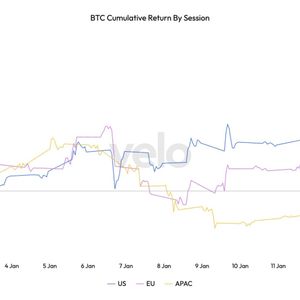
BitcoinWorld Bitcoin Demand Remains Alarmingly Weak in US Markets Despite Recent Price Recovery Despite Bitcoin’s significant price rebound in recent weeks, U.S. institutional and retail demand for the cryptocurrency remains surprisingly weak, creating a concerning divergence that market analysts are closely monitoring. This persistent weakness in American Bitcoin demand manifests most clearly through the Coinbase Premium indicator, which has remained predominantly negative since early November 2024, according to data from CoinDesk. The current trading environment shows Bitcoin consistently priced lower on U.S.-based exchange Coinbase compared to global platform Binance, signaling reduced American buying pressure that could influence broader market dynamics throughout 2025. Bitcoin Demand Divergence Between US and Global Markets The cryptocurrency market currently presents a puzzling scenario where Bitcoin’s price recovery hasn’t translated into renewed American enthusiasm. Market data reveals that Bitcoin consistently trades at a discount on Coinbase compared to Binance, typically ranging between $50 and $200 throughout early 2025. This price discrepancy, known as the “Coinbase discount,” directly contradicts patterns observed during previous bull markets when U.S. investors typically paid premiums for Bitcoin access. Furthermore, trading volume analysis shows American exchanges capturing a declining percentage of global Bitcoin transactions, dropping from approximately 35% in early 2024 to around 28% by January 2025. Several factors contribute to this weakening Bitcoin demand in American markets. Regulatory uncertainty continues to influence institutional behavior, particularly following the SEC’s delayed decisions on spot Bitcoin ETF applications and ongoing congressional debates about digital asset frameworks. Additionally, traditional financial institutions have maintained cautious positions despite Bitcoin’s price recovery, with many waiting for clearer regulatory guidance before committing significant capital. The Federal Reserve’s monetary policy stance has also impacted investor sentiment, as higher interest rates make risk-free Treasury yields more attractive compared to volatile digital assets. Historical Context of US Bitcoin Market Leadership American investors historically drove Bitcoin market cycles, particularly during the 2017 and 2021 bull markets. Institutional adoption accelerated dramatically between 2020 and 2022, with companies like MicroStrategy, Tesla, and Square making substantial Bitcoin purchases. The Coinbase Premium indicator, which measures the price difference between Coinbase and Binance, consistently showed positive values during these periods, indicating strong U.S. demand. This premium peaked dramatically in October 2023 when it reached approximately $350, coinciding with speculation about Bitcoin ETF approvals. However, the indicator turned negative in early November 2023 and has remained predominantly negative since, marking the longest sustained period of U.S. demand weakness in Bitcoin’s history. Analyzing the Coinbase Premium Indicator Trends The Coinbase Premium serves as a crucial barometer for institutional Bitcoin demand in American markets. This indicator calculates the percentage difference between Bitcoin’s price on Coinbase Pro and Binance, with positive values indicating stronger U.S. demand and negative values suggesting weaker American interest. Throughout 2024, the premium displayed remarkable volatility before settling into predominantly negative territory. Market analysts attribute this shift to several interconnected factors affecting Bitcoin demand among American institutions. Key observations from Coinbase Premium data include: The premium reached its 2024 peak of +2.3% in October before turning negative November 2024 marked the beginning of sustained negative readings The indicator has shown brief positive spikes but quickly returned to negative territory Current readings consistently range between -0.5% and -1.2% The premium correlates strongly with U.S. trading volume percentages This sustained negative premium contrasts sharply with global Bitcoin demand patterns. Asian and European markets have demonstrated stronger buying interest during the same period, particularly following regulatory developments in jurisdictions like Hong Kong and the European Union’s comprehensive MiCA framework implementation. The geographical shift in Bitcoin demand leadership represents a significant development for global cryptocurrency market structure, potentially altering liquidity patterns and price discovery mechanisms. Institutional Behavior and Regulatory Impacts American institutional investors have adopted increasingly cautious approaches to Bitcoin throughout 2024 and into 2025. Major financial institutions that previously announced cryptocurrency initiatives have slowed implementation timelines, while others have quietly reduced their digital asset exposure. This institutional hesitation directly impacts Bitcoin demand metrics, as these entities typically represent the largest volume buyers during market recoveries. Several regulatory developments have particularly influenced this cautious stance toward Bitcoin investment. The Securities and Exchange Commission continues its deliberate approach to cryptocurrency regulation, creating uncertainty that affects institutional Bitcoin demand. Multiple spot Bitcoin ETF applications remain pending despite earlier market expectations for 2024 approvals. Banking regulators have simultaneously increased scrutiny on cryptocurrency exposures, with the Federal Reserve issuing guidance about digital asset risks for banking organizations. Congressional efforts to establish comprehensive cryptocurrency legislation have progressed slowly, leaving market participants without clear regulatory frameworks for Bitcoin investment and custody. Bitcoin Demand Factors in US vs Global Markets (2024-2025) Factor US Market Impact Global Market Impact Regulatory Clarity Limited progress, creating uncertainty Advancing frameworks in EU, Hong Kong, UAE Institutional Adoption Cautious, waiting for clearer signals Progressive, with new entrants regularly Trading Volume Trend Declining percentage of global total Increasing in Asian and European markets Price Premium/Discount Consistent discount on Coinbase Neutral to slight premium on Asian exchanges Market Structure Implications The weakening American Bitcoin demand has significant implications for market structure and price discovery. Historically, U.S. trading hours produced the highest volatility and volume, but this pattern has shifted toward Asian and European sessions. Liquidity providers have adjusted their operations accordingly, with some reducing American market-making activities while expanding Asian coverage. This geographical redistribution of Bitcoin demand and liquidity could potentially reduce market efficiency during U.S. trading hours while increasing importance of global coordination for price stability. Comparative Analysis with Previous Market Cycles Current Bitcoin demand patterns in American markets differ substantially from previous recovery periods. Following the 2018 bear market, U.S. institutional interest accelerated rapidly throughout 2019, with the Coinbase Premium showing consistent positive values ahead of the 2020-2021 bull market. Similarly, after the 2022 downturn, American investors returned relatively quickly, particularly following banking sector instability in early 2023. The current prolonged weakness in Bitcoin demand despite price recovery represents an unprecedented divergence from historical patterns. Several unique factors distinguish the current environment from previous cycles. Macroeconomic conditions present particular challenges, with persistent inflation concerns and elevated interest rates reducing risk appetite among traditional investors. Geopolitical tensions have increased capital preservation instincts, while banking sector stability has reduced one traditional catalyst for Bitcoin adoption. Technological developments have also evolved, with layer-2 solutions and alternative blockchain networks capturing investment that might previously have flowed directly into Bitcoin. Notable differences from previous recovery periods include: Longer duration of negative Coinbase Premium readings Reduced retail participation despite price recovery Increased regulatory scrutiny across multiple agencies Stronger competition from alternative digital assets More developed institutional infrastructure elsewhere Potential Scenarios for US Bitcoin Demand Recovery Market analysts have identified several potential catalysts that could reverse the current weakness in American Bitcoin demand. Regulatory developments represent the most significant potential driver, particularly approval of spot Bitcoin ETFs that would provide traditional investors with familiar access vehicles. Congressional action establishing clear digital asset frameworks could similarly boost institutional confidence and Bitcoin investment. Macroeconomic shifts might also influence demand, particularly if interest rate reductions increase risk appetite or if dollar weakness enhances Bitcoin’s appeal as an alternative store of value. Technological advancements could additionally stimulate Bitcoin demand through improved accessibility and utility. Continued development of layer-2 solutions like the Lightning Network enhances Bitcoin’s transaction capabilities, while institutional custody solutions address security concerns that have limited some traditional investor participation. Corporate treasury adoption represents another potential demand source, particularly if high-profile companies resume Bitcoin accumulation strategies following clearer regulatory guidance. Monitoring Key Indicators Market participants should monitor several specific indicators for signs of changing Bitcoin demand dynamics in American markets. The Coinbase Premium remains the most direct measurement, with sustained positive readings signaling demand recovery. Trading volume ratios between U.S. and global exchanges provide additional context, particularly if American platforms regain market share. Institutional flow data from regulated platforms like CME Bitcoin futures offers insight into professional investor behavior, while on-chain analytics reveal accumulation patterns among large Bitcoin holders. Conclusion The persistent weakness in U.S. Bitcoin demand despite the cryptocurrency’s price rebound represents a significant market development with implications for global digital asset dynamics. The sustained negative Coinbase Premium indicator, combined with reduced American trading volumes, signals cautious institutional behavior influenced by regulatory uncertainty and macroeconomic factors. While global Bitcoin demand has demonstrated resilience, particularly in Asian and European markets, American participation remains subdued as investors await clearer signals. This divergence in Bitcoin demand patterns between geographical regions may influence price discovery mechanisms and market structure throughout 2025, potentially creating opportunities while highlighting the evolving nature of global cryptocurrency adoption. FAQs Q1: What is the Coinbase Premium indicator and why does it matter for Bitcoin demand? The Coinbase Premium measures the price difference between Bitcoin on Coinbase and Binance exchanges. Positive values indicate stronger U.S. demand, while negative values suggest weaker American interest. This indicator matters because it provides real-time insight into institutional Bitcoin demand patterns, particularly among U.S.-based investors who predominantly use regulated platforms like Coinbase. Q2: How long has U.S. Bitcoin demand been weak according to current data? American Bitcoin demand weakness has persisted since early November 2024, marking approximately three months of predominantly negative Coinbase Premium readings as of January 2025. This represents the longest sustained period of U.S. demand weakness relative to global markets in Bitcoin’s history, particularly notable because it coincides with a broader price recovery. Q3: What factors are contributing to weak Bitcoin demand in American markets? Several interconnected factors contribute to weak U.S. Bitcoin demand, including regulatory uncertainty surrounding cryptocurrency frameworks and ETF approvals, cautious institutional behavior amid macroeconomic concerns, reduced retail participation compared to previous cycles, and increased competition from global markets with clearer regulatory environments. Q4: How does current U.S. Bitcoin demand compare to previous market cycles? Current U.S. Bitcoin demand patterns differ substantially from previous recovery periods. Following previous bear markets, American institutional interest typically accelerated ahead of price recoveries, with positive Coinbase Premium readings. The current prolonged weakness despite Bitcoin’s price rebound represents an unprecedented divergence from historical patterns, suggesting structural changes in market participation. Q5: What could reverse the current weakness in American Bitcoin demand? Potential catalysts for renewed U.S. Bitcoin demand include regulatory developments like spot Bitcoin ETF approvals, congressional action establishing clear digital asset frameworks, macroeconomic shifts such as interest rate reductions, technological advancements improving Bitcoin accessibility, and resumed corporate treasury adoption following clearer regulatory guidance. This post Bitcoin Demand Remains Alarmingly Weak in US Markets Despite Recent Price Recovery first appeared on BitcoinWorld .