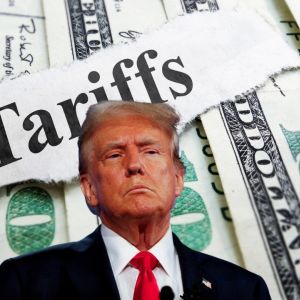
The U.S. government could be on the hook for more than $133.5 billion in tariff refunds if the Supreme Court rules that tariffs imposed under President Donald Trump’s administration were unlawful, according to the latest data from U.S. Customs and Border Protection. The tariffs in question were levied beginning in February 2025 under the International Emergency Economic Powers Act (IEEPA), a 1977 law meant to be used only in “unusual and extraordinary” national emergencies. The Trump administration used the statute to justify sweeping duties on imports from countries including China, Mexico, and Canada — and later imposed global “reciprocal” tariffs on a broad range of goods. The legality of these tariffs is now under review by the U.S. Supreme Court. Justices heard arguments in November and may issue rulings as soon as this Friday, though it remains uncertain which cases will cover the Trump-era tariffs Supreme Court reviews Trump’s tariffs The top Supreme Court question is whether Trump’s use of the IEEPA law to impose tariffs on imports was legal or not. If tariffs are ruled to have been illegal, the government may be required to reimburse the companies and individuals who paid the taxes. The outcome of the refund process is still uncertain. The Court renders its final decision but does not specify an exact method for those involved in returning money to lower courts or the federal government; rather, it leaves them to decide how to proceed. That means that a considerable period of time will likely elapse before any monies are actually returned. People following the case online are using betting platforms to predict the Supreme Court’s decision on the Trump-era tariffs. On Kalshi, the odds that the court will rule in Trump’s favor are 30%, while on Polymarket, they are about 23%. Both are lower than the roughly 40% seen after oral arguments in November, indicating that justices seemed uncertain at that time about whether the tariffs were legal. Trump’s “reciprocal” duties on goods from countries ranging from 10% to 50% were first imposed on April 5, with subsequent reductions in some cases resulting from trade negotiations. Additional punitive duties of 40% were imposed on goods from Brazil on August 6, while Indian goods were subject to an additional punitive duty of 25% on August 27. How much money did tariffs really raise? Donald Trump recently claimed on Twitter that the U.S. has already collected—or will soon collect—$600 billion in tariffs. Official data tell a different story. According to the U.S. Treasury Department, total customs duties—tariffs collected on imported goods—reached a record $195 billion in fiscal year 2025, which ended on September 30. Since then, monthly collections have been in the low $30 billion range, meaning the $600 billion figure cited by Trump far exceeds what the government has actually collected. Trump’s tariffs had a huge effect on many imports. If the Supreme Court were to find these tariffs illegal, it would be a significant blow to the president and a loss for the government. Experts say this case is particularly important because it will demonstrate the extent of a president’s power and the scope to which laws like the IEEPA can be applied. Some believe the president should have the authority to protect the country’s economy. Others argue that emergency laws should not be used to impose long-term taxes on everyday products. Join a premium crypto trading community free for 30 days - normally $100/mo.