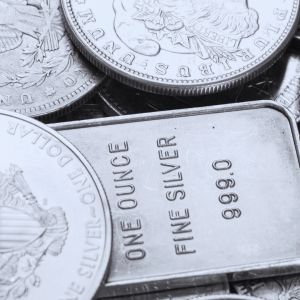
Reports allege that the Silver market is being heavily manipulated worldwide. A recent price analysis of silver revealed that the metal is trading at two different prices simultaneously. The report highlighted that the precious metal is trading at around $92 in the U.S. (COMEX), while physical Silver in Shanghai, China, costs $130, a 40% premium in the Asian country. In the U.S., silver trading is dominated by paper contracts that track the metal’s price, and most of the volume is not real silver being bought or sold. The paper-to-physical ratio of America is estimated at around 350:1, meaning that for every real ounce traded, there are more than 350 paper claims. Since paper trading accounts for a large share of Silver’s trading volume in the U.S., large institutions can sell large contracts of Silver, significantly lowering its floor price even though physical Silver is still tight and does not need to be sold. Physical Silver prices in Shanghai remain at ATHs despite recent correction In Shanghai, where SMM prices reflect actual physical transactions inside China, Silver is currently trading at $120, with Shanghai spot prices bursting to $130. The prices reflect growing demand for physical Silver, but paper trading prices in the U.S. have been massively discounted. The widening gap between Silver prices on the U.S. COMEX and the Shanghai market shows that negative prices are influencing Silver prices in paper trading despite the underlying value of physical silver rising. 🚨JUST IN: Silver has fallen 34% in the last 24 hours, hitting $74 and marking its largest single-day decline on record. pic.twitter.com/eMPZK9tMSP — SolanaFloor (@SolanaFloor) January 30, 2026 In January alone, Silver has risen by more than 60% and logged a 140% gain in 2025. The price of Silver futures contracts has plummeted by a staggering 34% over 24 hours, hitting a $74 low last seen in early January as the market was going higher. The significant drop in Silver futures prices marked the largest single-day decline the metal has ever experienced. Gold also suffered the same fate. The precious metal had nearly doubled over the past 12 months, breaking a record above $5,000 per ounce for the first time and briefly trading near $5,600. After successfully racing to all-time highs, Gold dropped significantly from a high of $5,597.04 to a low of $4,686.12 in less than 24 hours. The dramatic drop experienced by the two metals wiped out over $3 trillion in less than 24 hours. Many investors and retail traders were left disoriented by the speed and scale of the price decline. Experts believe a correction in precious metals was inevitable The metals have been haven assets for investors and traders as geopolitical tensions, currency weakness, record government debt, and trade wars in the U.S., China, and Europe escalated. Which begs the question, why the significant drop? Was it market manipulation? Well, gold and silver had been used by long-term investors as a hedge against inflation. However, by January, the precious metals were no longer simply reflecting geopolitical risk or inflation hedging. They had become part of a broader “risk-off but momentum-on” trade, sitting alongside crowded, leveraged, and flow-driven positioning. Experts highlight that when markets reach this stage, a correction is due any moment, and the market is a ticking time bomb. After the collapse, Ole S Hansen, Saxo Bank’s head of commodity strategy, wrote on X that Silver “can rally but only for so long without eventually killing demand and causing a rush of supply from scrap sellers.” He then said that Gold will remain the ultimate haven. In another X post, Hansen cited COT on Silver and wrote that Hedge Funds and large financial institutions are concerned by worsening trading conditions on Silver. He added that these large market participants reduced their net long positions by one-third in the week to last Tuesday. While some argue that the precious metals market is currently under deep manipulation, others say it was a normal, classic crowded-trade correction. Precious metal prices had risen too far, too fast, triggering profit-taking and forced selling. Similar occurrences have played out repeatedly across various asset classes such as tech stocks, cryptocurrencies, and commodities. Precious metals are not immune to market dynamics. If you're reading this, you’re already ahead. Stay there with our newsletter .